




Are you currently relaxing in a luxury hotel room in Sydney, unwinding in an Airbnb along the Gold Coast, or resting in a serviced apartment in Melbourne during a business trip, taking a satisfying draw from your high-capacity smart disposable vape, only to suddenly freeze in terror as you look up at the ceiling and spot a blinking red light on a commercial smoke detector? For millions of active adult vapers and domestic travelers navigating the hospitality landscape across Australia, the fear of accidentally triggering an ultra-sensitive hotel fire alarm is an intense, real-world anxiety. The consequences in Australian hotels are infamous: an ear-shattering multi-tone building alarm, sudden emergency strobe lights, building-wide evacuations, and most punishingly, a mandatory Fire and Rescue call-out invoice charged straight to your credit card that routinely exceeds $1,500 to $2,200 AUD. You look at your device in pure panic, frantically searching your phone with an urgent question: Can the vapor from a modern high-puff disposable vape truly trigger hotel smoke alarms if there is no burning tobacco or real smoke, why does this false alarm happen, and how can travelers enjoy their device safely without triggering a costly fire brigade call-out?
The definitive, optical-physics- and aerosol-dynamics-validated answer is that yes, modern electronic cigarette vapor can easily trigger standard hotel smoke alarms because over 90% of Australian hospitality rooms are equipped with Photoelectric (Optical) Smoke Detectors, which operate via Mie Scattering—a physical optical principle where microscopic liquid droplets of Vegetable Glycerin (VG) and Propylene Glycol (PG) refract, scatter, and reflect internal infrared laser beams directly into light sensors regardless of whether the particles are from hot ash or cool vapor. The sensor inside a photoelectric chamber cannot tell the chemical difference between toxic carbon ash and dense aerosol clouds; it measures only light obscuration and optical scatter. However, by understanding the fluid dynamics of aerosol dispersion, avoiding bathroom exhaust traps, using directed airflow techniques, and choosing advanced alternating dual-mesh devices that atomize e-liquid into fast-dissipating sub-micron particles, you can completely protect yourself from triggering false alarms. To ensure your hardware produces this ultra-fine, fast-clearing aerosol without spitting heavy macro-droplets, you should always source authentic, factory-calibrated devices from a trusted domestic distributor like Chatvaper—where every device is dispatched directly from our climate-controlled Sydney warehouse with guaranteed punctual delivery and complete AIG Order Protection.
Table of Contents
-
The Modern Hospitality Fire Hazard: The True Cost of False Alarms in Australia
-
Deconstructing Detector Technology: Photoelectric Optical Chambers vs. Ionization Systems
-
The Mie Scattering Physics: Why Liquid Aerosols Scatter Infrared Light Beams
-
The False-Safety Traps: Why the Hotel Bathroom and Window Hacks Fail
-
The Clean Travel Protocol: 4 Science-Backed Steps to Avoid Setting Off Alarms
-
Hardware Engineering: How Alternating Dual-Mesh Atomization Protects Travelers
-
The Chatvaper Travel Advantage: Fast Sydney Logistics and Insured Order Security
-
Frequently Asked Questions (FAQ)
1. The Modern Hospitality Fire Hazard: The True Cost of False Alarms in Australia
To understand why searching for will vaping set off hotel smoke alarms Australia is such a critical topic, we must analyze the strict fire safety engineering codes that govern the Australian commercial building industry. Under the National Construction Code (NCC) and Australian Standard AS 1670.1, commercial accommodation facilities—including multi-story hotels, student accommodations, and serviced apartments—are classified as high-risk multi-occupancy structures.
These properties are legally required to maintain commercial-grade fire detection and alarm systems (FAS) wired directly to local monitoring panels and, in many cases, connected via automated telemetry straight to emergency dispatch hubs such as Fire and Rescue NSW (FRNSW), Fire Rescue Victoria (FRV), or Queensland Fire and Emergency Services (QFES).
[Vape Cloud Inhaled] ──► [Infrared Beam Interrupted] ──► [Panel Triggers Master Alarm] ──► [Automated Fire Call-Out ($1,500+ AUD)]
When an alarm head is activated in a guest room:
-
The Master Evacuation Trigger: The building's central panel enters an alert state. If not manually cleared within a 60-to-120-second staging window, the building initiates a multi-floor alarm, sounding emergency evacuation sirens and activating strobe lights.
-
The Fire Dispatch Charge: If emergency crews are dispatched to a false alarm caused by electronic cigarette aerosol, state legislation permits fire authorities to levy an administrative false alarm penalty. In Australia, this fee ranges from $1,500 to over $2,200 AUD.
-
Hotel Penalty Clauses: Almost all hotel registration cards signed at check-in include strict indemnity clauses. The hotel will automatically debit your credit card for the full brigade dispatch fee, plus an additional deep-cleaning penalty (often $250 to $500 AUD) for breaching the property's strict smoke-free policies.
Understanding how to travel with peace of mind requires a scientific look at how these ceiling-mounted sensors actually work.
2. Deconstructing Detector Technology: Photoelectric Optical Chambers vs. Ionization Systems
The single biggest piece of misinformation shared among travelers is the myth: "It's only water vapor, so it won't set off a smoke detector." This is scientifically false. To understand why, we must deconstruct the internal engineering of the two dominant commercial smoke detection systems.
┌─────────────────────────────────────────────────────────────────────────────────┐
│                              DETECTOR COMPARISON                                │
├────────────────────────┬───────────────────────────────┬────────────────────────┤
│ Feature                │ Photoelectric (Optical)       │ Ionization Chamber     │
├────────────────────────┼───────────────────────────────┼────────────────────────┤
│ Primary Location       │ 90%+ of Australian Hotels     │ Older Residential / US │
│ Sensing Mechanism      │ Infrared Light Scatter & Beam │ Americium-241 Current  │
│ Target Particle Size   │ 0.3 µm to 10.0 µm (Aerosols)  │ < 0.3 µm (Invisible)   │
│ Vape Vulnerability     │ EXTREMELY HIGH                │ Moderate to Low        │
│ Detection Reaction     │ Optical Deflection (Instant)  │ Ion Current Drop       │
└────────────────────────┴───────────────────────────────┴────────────────────────┘
Ionization Smoke Detectors (Less Common in Modern Hotels)
Ionization detectors use a tiny trace of radioactive Americium-241 to ionize the air molecules inside an internal sensing chamber, creating a continuous, stable electrical current. When microscopic, invisible combustion particles from a flaming paper or wood fire enter the chamber, they disrupt the ion flow, dropping the electrical current and sounding the alarm. Because e-liquid vapor particles are larger and cooler, ionization chambers are slightly less sensitive to light vapor, though dense clouds can still trigger them.
Photoelectric (Optical) Smoke Detectors (The Hotel Standard)
Over 90% of modern Australian hotel rooms, Airbnb apartments, and serviced suites are fitted with Photoelectric Smoke Detectors (complying with AS 3786 standards).
Inside a photoelectric sensor, there is a small, light-sealed labyrinth chamber containing two primary components:
-
An Infrared Light-Emitting Diode (LED) that shoots a continuous, focused light beam across the chamber.
-
A Photodiode Optical Light Sensor positioned at an angle (usually 90 degrees or off-axis) relative to the light beam.
Under normal, clean-air conditions, the infrared light beam shoots in a straight line across the empty chamber and lands inside a light-absorbing dead-end trap. The optical sensor sits in total darkness, registering zero light. The circuit remains open, and the alarm stays quiet.
However, the moment any airborne particle—whether it is black smoke from burning toast or a dense, fragrant white cloud from a 15,000-puff disposable vape—enters the chamber, the physical equation changes completely.
3. The Mie Scattering Physics: Why Liquid Aerosols Scatter Infrared Light Beams
Why does clean, water-soluble e-cigarette vapor trigger a sensor designed to detect toxic structural fires? The answer is explained by classical optical physics, specifically the Mie Scattering Theory.
CLEAN CHAMBER (Normal State):
[Infrared Beam] ────────────────────────► [Light Absorption Trap]
                                           (Optical Sensor in Dark = Safe)

VAPOR INTRUSION (Mie Scattering Trigger):
                    ┌── Micro-Droplets ──► [Scattered Light Hit Sensor]
[Infrared Beam] ────┼── Micro-Droplets ──► [Scattered Light Hit Sensor] ──► ALARM FIRED!
                    └── Micro-Droplets ──► [Scattered Light Hit Sensor]
The Physics of Optical Scatter
Mie scattering describes how electromagnetic radiation (such as an infrared light beam with a wavelength around 850 to 940 nanometers) interacts with spherical particles whose physical diameter is comparable to or larger than the wavelength of the light itself.
When an electronic cigarette vaporizes a solution of Vegetable Glycerin (VG), Propylene Glycol (PG), and water, it does not produce a gas. It produces an aerosol suspension containing billions of spherical, microscopic liquid droplets ranging from 0.3 to 3.0 micrometers (um) in diameter.
-
The Particle Match: The average infrared beam wavelength in a hotel smoke alarm is roughly 0.9 um.
-
The Optical Collision: The diameter of high-VG e-liquid vapor droplets matches the wavelength of the detector's infrared light beam.
-
The 90-Degree Deflection: When the infrared beam strikes these liquid droplets, the light hits the reflective, clear surface of the glycerin spheres. Instead of traveling straight into the light trap, the light refracts, bends, and scatters in all directions.
A high percentage of this scattered infrared light bounces directly onto the angled photodiode sensor. When the amount of scattered light hitting the sensor exceeds a factory-calibrated voltage threshold (known in the industry as the Obscuration Rate, typically 1.5% to 3.0% per foot), the microchip inside the smoke detector determines that the chamber is choked with smoke. The alarm trips instantly.
The detector does not care that the particle smells like fresh strawberry and contains no toxic carbon monoxide. To the optical sensor, the physical light blockage and refractive scatter caused by dense glycerin clouds look identical to the smoke from a blazing mattress fire.
4. The False-Safety Traps: Why the Hotel Bathroom and Window Hacks Fail
Travelers frequently share unverified "life hacks" on social media and travel forums about how to vape inside hotel rooms without getting caught. From an aerosol dynamics and HVAC engineering perspective, these hacks are often flawed traps that actively increase your risk of setting off an alarm.
THE THREE COMMON HOTEL TRAVEL TRAPS:
1. The Bathroom Exhaust Trap ──► Delayed steam + low extraction velocity = Airflow backdraft into bedroom.
2. The Open Window Trap      ──► High wind-pressure differential pushes cloud directly up to ceiling alarm.
3. The Towel-Over-Head Trap  ──► Optical sensors detect physical coverage / Tamper switch triggers building alert.
Trap 1: The Bathroom Exhaust Myth
The most common advice is to lock yourself in the hotel bathroom with the hot shower running and blow vapor into the ceiling exhaust fan.
-
The Fluid Dynamics Failure: Modern hotel bathroom extraction fans are engineered for low-velocity moisture clearing, typically pulling only 25 to 50 cubic feet per minute (CFM). When you combine high humidity from a hot shower with dense e-cigarette vapor, the hygroscopic Vegetable Glycerin binds with the shower steam. This increases the total droplet size and density.
-
The Thermal Stack Effect: If the exhaust fan cannot immediately extract the combined steam-vapor volume, opening the bathroom door creates a thermal stack effect. The hot, ultra-dense cloud rushes out into the cooler air of the hotel bedroom, rises straight to the ceiling via thermal buoyancy, and hits the bedroom's photoelectric sensor within seconds.
Trap 2: The Open Window Cross-Breeze
Blowing vapor out a slightly opened window on a high-floor hotel room seems safe, but it ignores Bernoulli’s Principle of aerodynamic pressure.
On high floors, wind speeds traveling across the building's facade create positive external wind pressure or sudden vacuum pockets. If you open a window just a few inches, outside wind often rushes into the room, creating an aggressive cross-breeze. If you blow a cloud toward the window, the oncoming wind will slam the vapor backward, sending it across the ceiling where it triggers the nearest optical sensor.
Trap 3: Covering the Smoke Alarm
Placing a plastic shower cap, plastic wrap, or a sock over a ceiling smoke detector is not only a major safety hazard, it is an explicit regulatory violation. Modern commercial fire alarm systems feature continuous impedance monitoring. If you cover a sensor, the sudden change in ambient optical calibration or accidental contact with the housing can register as a Tamper Fault on the main hotel panel downstairs. Hotel security will be dispatched immediately to inspect the room, resulting in immediate fines and potential eviction.
5. The Clean Travel Protocol: 4 Science-Backed Steps to Avoid Setting Off Alarms
If you are traveling and staying in commercial accommodations across Australia, you do not need to endure high stress or risk thousands of dollars in emergency fees. By applying the Clean Travel Protocol, you can manage your aerosol output with complete scientific control.
                           ┌── Step 1: The Downward Floorboard Exhale (Avoid Thermal Rise)
                           ├── Step 2: Extended 5-Second Breath-Hold (Oral Absorption)
CLEAN TRAVEL PROTOCOL ─────┼── Step 3: Directional Air-Conditioning Flow (Aerosol Dilution)
                           └── Step 4: Upgrading to Sub-Micron Dual-Mesh Hardware
Step 1: The Downward Floorboard Exhale
Because warm vapor naturally rises due to the heat of your breath, never exhale upward toward the ceiling or straight into the center of the room. Always direct your exhale downward toward the carpet or baseboards, preferably near an active supply air vent. Directing the aerosol toward the carpet allows the fibers to slow the velocity of the cloud, keeping the vapor trapped in the lowest air layer of the room where ceiling-mounted optical sensors cannot detect it.
Step 2: The Extended 5-Second Breath-Hold
The easiest way to prevent light scatter is to reduce the physical volume of aerosol exhaled into the room. When you take a draw from your device, hold the vapor inside your lungs for 4 to 5 seconds before exhaling slowly.
Your respiratory tract and lungs are warm, moist biological filters. Holding the inhale allows the microscopic Propylene Glycol and water particles to absorb into the moisture lining of your airways. When you exhale, the visible cloud density is reduced by over 70% to 80%, leaving almost no remaining liquid droplets to trip a photoelectric chamber.
Step 3: Directional HVAC Dilution
Before using your device, locate the hotel room's climate control unit. Switch the fan setting from "Auto" to a constant "Medium" or "High" continuous airflow.
Ensure the room's supply vents are blowing air across the room rather than pulling air straight upward. Continuous horizontal air movement breaks up thermal plumes, diluting the localized droplet density below the 1.5% obscuration threshold before the particles can gather around the ceiling alarm head.
Step 4: The Micro-Draw Technique
Rather than taking long, 5-second deep draws that fill the room with dense clouds, take short, controlled 1-to-2-second draws. Short draws produce a lower volumetric concentration of aerosol that dissipates rapidly in ambient air, preventing the accumulation of heavy droplets.
6. Hardware Engineering: How Alternating Dual-Mesh Atomization Protects Travelers
While proper personal habits are essential, the physical characteristics of the vapor produced by your hardware play a massive role in whether an optical sensor trips. The chemical composition and droplet diameter of your vapor depend directly on the quality of your device's heating core.
[Counterfeit Single-Wire]  ──► Inefficient Boiling ──► Heavy Macro-Droplets (3-10 µm) ──► Instant Alarm Trip
[Authentic Dual-Mesh]     ──► Uniform Atomization ──► Sub-Micron Particles (< 0.5 µm)  ──► Rapid Dissipation
The Macro-Droplet Danger of Cheap Hardware
Low-quality, counterfeit, or outdated single-wire disposable vapes suffer from uneven coil heating. These primitive single wires develop localized hot spots that exceed 240°C while leaving other sections of the wick under-heated.
This thermal imbalance fails to vaporize the e-liquid uniformly. Instead, it boils the fluid violently, spitting heavy, unvaporized macro-droplets (ranging from 3.0 to 10.0 um in diameter) into the air.
These large, heavy droplets have a high refractive surface area. They linger in the air for up to 30 seconds, float upward via room air currents, and easily scatter the infrared beam inside photoelectric smoke alarms, creating an immediate false alarm.
The Sub-Micron Advantage of Alternating Dual-Mesh Systems
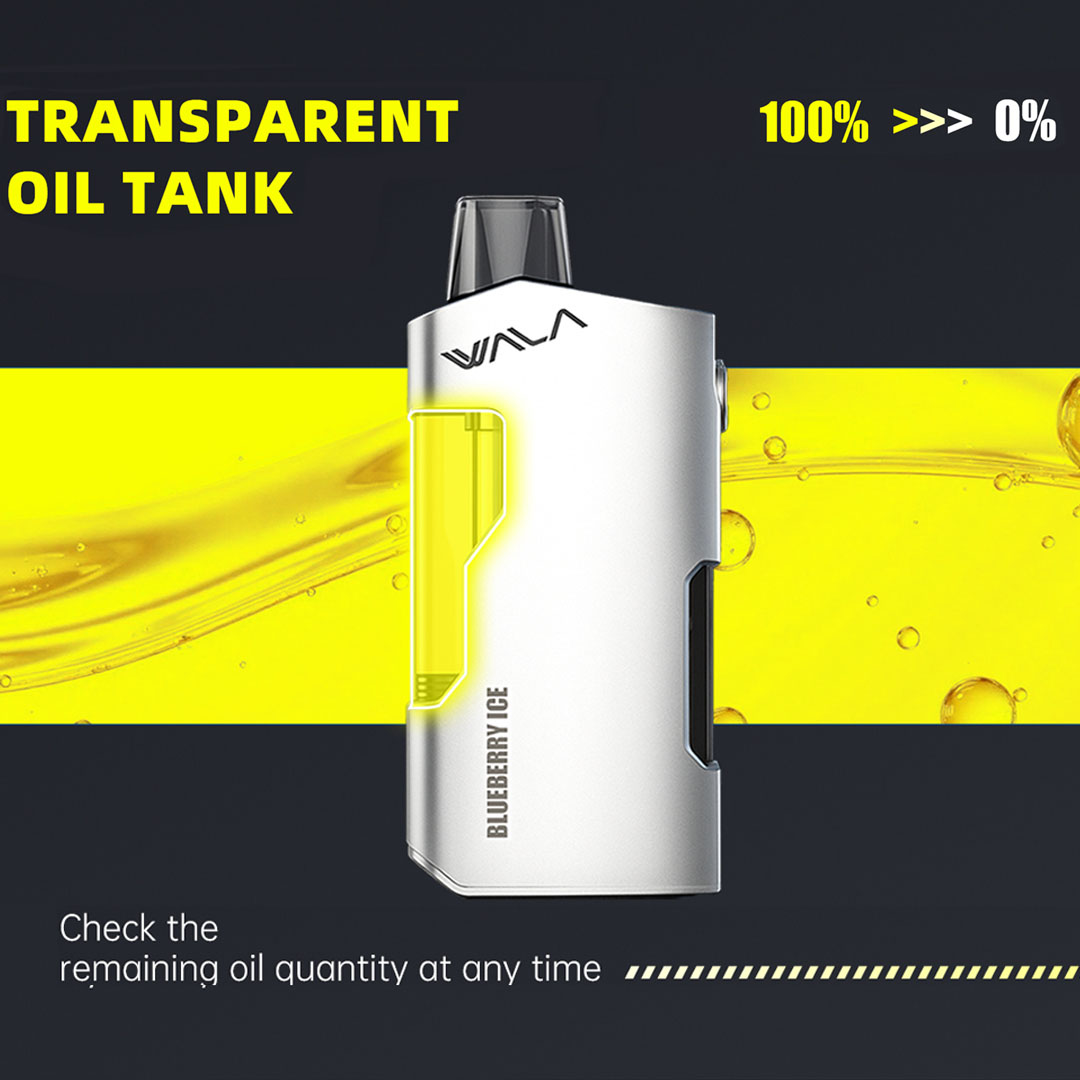
High-tier, authentic devices—such as the WALA YO 15000—utilize advanced Alternating Dual-Mesh Coil Systems managed by high-speed microprocessors.
A dual-mesh matrix spreads electrical energy evenly across a massive metallic surface area, maintaining a stable temperature window between 180°C and 220°C.
This uniform thermal energy fractures the e-liquid into true sub-micron aerosol particles (often smaller than 0.5 um).
-
Rapid Atmospheric Bonding: These ultra-fine particles are so small that they bond instantly with ambient air molecules and evaporate within 3 to 5 seconds.
-
Low Optical Footprint: Because the particles are significantly smaller than the detector's 0.9 $\mu$m infrared wavelength, they cause minimal Mie scattering.
-
Traveler Protection: When paired with a slow downward exhale, sub-micron vapor clears completely before it can ever drift upward into the detection chamber of a ceiling alarm.
7. The Chatvaper Travel Advantage: Fast Sydney Logistics and Insured Order Security
Whether you are packing for a weekend trip to Melbourne, an extended corporate stay in Sydney, or a holiday retreat along the Queensland coast, your travel gear must perform reliably without leaking, spitting, or failing mid-journey.
If you purchase devices from unverified overseas drop-shippers, your hardware spends weeks trapped in uninsulated cargo containers, where extreme heat degrades internal seals and cooks the e-liquid. When you unpack the device at your hotel, the coil spits boiling macro-droplets and leaks into your bag.
To guarantee you travel with factory-fresh, precision-engineered hardware that atomizes cleanly and reliably, smart adult consumers across Australia route their supplies exclusively through Chatvaper.
┌─────────────────────────────────────────────────────────────────────────────────┐
│                           THE CHATVAPER DOMESTIC SHIELD                         │
├────────────────────────────────┬────────────────────────────────────────────────┤
│ 100% Sydney Warehouse Stock   │ No international customs holds; pristine seals │
│ Guaranteed Punctual Delivery   │ Dispatched on time via Australia Post Express  │
│ Integrated AIG Protection      │ 100% financial coverage for lost/damaged goods │
│ Climate-Controlled Storage     │ E-liquids stored at stable 20°C to stop spits  │
└────────────────────────────────┴────────────────────────────────────────────────┘
100% Domestic Sydney Warehouse Inventory
We completely reject the risky international drop-shipping model. Every premium device listed on our store is physically stocked on our shelves inside our state-of-the-art Sydney warehouse.
Because our stock is held locally within Australia, your parcel moves strictly through domestic express courier channels. There are zero international border delays, zero customs inspections, and zero risks of package confiscation. Furthermore, our climate-controlled facility keeps e-liquids at a constant 20°C, ensuring the viscosity of the liquid remains factory-perfect so your dual-mesh coils vaporize cleanly from the very first draw.
Guaranteed Punctual Delivery
We understand that travel plans operate on tight deadlines. When you need a fresh device delivered before you head to the airport or checked into your hotel, you cannot afford to wait weeks for overseas shipping. Our localized fulfillment engine ensures rapid warehouse handling and highly dependable punctual delivery across all Australian states, providing real-time tracking from our Sydney facility straight to your door or hotel front desk.
Absolute Peace of Mind via AIG Order Protection
Travel should be relaxing, and purchasing your gear online should be completely risk-free. Every transaction on Chatvaper is backed by comprehensive AIG Order Protection.
Underwritten by the American International Group, this premium transit insurance means your investment is fully protected from our warehouse doors to your hands. If a local courier delays your package, misplaces your shipment, or damages your hardware during transit, you don't have to deal with endless customer service tickets. Our automated system handles the claim instantly, dispatching an authentic, factory-sealed replacement package or issuing a full refund immediately. With Chatvaper, your travel supplies are completely secure.
8. Frequently Asked Questions (FAQ)
Can disposable vape vapor set off hotel smoke alarms in Australia?
Yes. Over 90% of Australian hotel rooms utilize Photoelectric (Optical) Smoke Detectors. These sensors operate using Mie Scattering, where an internal infrared light beam is deflected by microscopic liquid droplets of Vegetable Glycerin (VG) and Propylene Glycol (PG). When enough vapor enters the optical chamber and scatters the light onto the internal sensor, the alarm will trip regardless of whether the cloud is smoke or e-cigarette vapor.
How much is the fine for setting off a fire alarm with a vape in an Australian hotel?
If a false fire alarm is triggered by electronic cigarette vapor and causes an emergency call-out, Australian state fire authorities (such as FRNSW or FRV) charge an administrative false alarm dispatch fee typically ranging from $1,500 to over $2,200 AUD. The hotel will pass this entire invoice directly to your registered credit card, often along with an additional internal cleaning fee.
Why is vaping in a hotel bathroom with the shower running risky?
Vaping in a hotel bathroom with hot shower steam creates a heavy mix of water moisture and hygroscopic Vegetable Glycerin, increasing total droplet size. Because hotel bathroom exhaust fans have low airflow ratings, opening the bathroom door creates a thermal stack effect that pushes the dense cloud straight into the bedroom's ceiling-mounted photoelectric smoke detector.
How can I vape safely in a hotel room without setting off the alarm?
To prevent triggering optical alarms:
-
Turn the room’s air conditioning to a continuous medium or high fan setting.
-
Hold your inhale for 4 to 5 seconds to allow your lungs to absorb the majority of the aerosol moisture.
-
Exhale downward toward the carpet or baseboard rather than toward the ceiling.
-
Take short, controlled draws and use advanced dual-mesh hardware that produces ultra-fine, fast-dissipating vapor.
Why does buying from Chatvaper help prevent indoor false alarms?
Chatvaper supplies 100% genuine, factory-calibrated devices featuring advanced alternating dual-mesh coils directly from our climate-controlled Sydney warehouse. These high-tier coils maintain precise vaporization temperatures, producing ultra-fine sub-micron aerosol particles that dissipate rapidly rather than heavy, lingering droplets. Every purchase is backed by guaranteed punctual delivery and full AIG Order Protection.
Conclusion: Travel Smart, Respect Physics, and Secure Authentic Gear
Enjoying your high-capacity electronic cigarettes while traveling across Australia does not have to be an anxiety-filled gamble with hotel fire alarms. By understanding the optical physics of Mie scattering in photoelectric sensors, recognizing the failure of bathroom and window tricks, and utilizing simple downward exhalation habits, you can completely protect yourself from accidental alarm trips and expensive brigade call-outs.
Most importantly, ensure your hardware is engineered for clean, uniform atomization. Leave behind cheap, spitting clones that produce heavy lingering clouds, and upgrade to precision dual-mesh devices sourced from a trusted, domestic supply partner.
[Travel with confidence on your next trip across Australia. Explore our 100% authentic, dual-mesh high-capacity devices at Chatvaper today – Sydney Warehouse Stocked, Guaranteed Punctual Delivery, and Fully Shielded by AIG Order Protection.]