Are you currently standing outside on a frosty winter morning in Melbourne, waiting for a train in chilly Hobart, or taking a break on the snowy alpine slopes of Thredbo, pulling your high-capacity smart disposable vape from your jacket pocket expecting a warm, satisfying draw, only to find the device acting completely dead? Or perhaps you take an inhale, feel an uncomfortably hard pull like sucking through a frozen straw, hear a loud gurgle, and get hit with an icy drop of condensed e-liquid shooting onto your tongue, while the LED battery indicator instantly drops from 80% to flashing empty in a single second? For hundreds of thousands of active adult vapers living in or visiting colder regions of Australia and across the globe, cold-weather vaping failures are a constant source of confusion and frustration. You tap the device against your glove, warm it between your palms, and stare at the frozen smart screen asking: Why do modern high-puff disposable vapes fail so rapidly in cold winter temperatures, why does the battery seem to die instantly in the cold, and how can you protect your device from condensation pooling and frozen e-liquid wicking starvation?
The definitive, electrochemistry- and thermal-physics-validated answer is that cold ambient temperatures (below 10°C / 50°F) trigger a severe triple-failure cascade in disposable vapes: first, according to Peukert’s Law and Arrhenius kinetics, the liquid electrolyte inside the lithium-ion battery thickens, spiking internal electrical resistance and causing severe voltage sag that fools the microchip into registering a dead battery; second, cold air cools the metallic and plastic chimney walls below the aerosol dew point, triggering Phase-Change Condensation where hot vapor instantly liquefies into a messy pool in the mouthpiece; and third, the viscosity of Vegetable Glycerin (VG) surges exponentially in cold weather, preventing the e-liquid from flowing into the cotton wick and causing immediate, catastrophic dry hits on an otherwise full tank. However, you can easily bypass this winter performance drop by keeping your hardware in thermal body-contact pockets, taking gentle primer puffs, and switching to advanced alternating dual-mesh devices that distribute heat uniformly across the wick. To ensure your winter vaping gear arrives with its internal lithium cells and e-liquid formulations factory-fresh and completely uncompromised by uncontrolled sub-zero freight conditions, you should always source your hardware from a verified domestic distributor like Chatvaper—where every device is stored in our climate-controlled Sydney warehouse, dispatched with guaranteed punctual delivery, and shielded by full AIG Order Protection.
Table of Contents
-
The Cold-Climate Vaping Dilemma: Winter Environmental Stress on Modern Disposables
-
Electrochemical Freeze: Peukert’s Law, Electrolyte Viscosity, and Instant Battery Sag
-
The Physics of Phase-Change Condensation: Drip-Tip Pooling and Spitting Mechanics
-
Viscosity Spike and Glass Transition: Why Cold E-Liquid Starves Cotton Wicks
-
Joule-Thomson Cooling: How Restricted Airflow Freezes the Chimney
-
The Sub-Zero Survival Protocol: 5 Steps to Protect Your Winter Vape
-
Hardware Engineering in Cold Weather: The Alternating Dual-Mesh Advantage
-
The Chatvaper Logistics Advantage: Climate-Preserved Sydney Stock and AIG Order Protection
-
Frequently Asked Questions (FAQ)
1. The Cold-Climate Vaping Dilemma: Winter Environmental Stress on Modern Disposables
Modern high-capacity disposable vapes, such as 15,000-puff smart-screen devices, are intricate micro-electronic devices calibrated in clean-room laboratory environments maintained at a steady 21°C to 24°C (70°F to 75°F). Within this optimal thermal window, the chemical properties of the e-liquid, the electrical conductivity of the battery, and the thermodynamic airflow channels operate in perfect balance.
However, when you take that device into cold outdoor conditions—such as a 4°C winter morning in Victoria, a freezing mountain weekend in the Snowy Mountains, or an unheated garage—you subject that calibrated system to severe thermal shock.
OPTIMAL CALIBRATION (22°C):
[Liquid: Smooth Viscosity] ──► [Battery: Low Internal Resistance] ──► [Vapor: 200°C Smooth Aerosol]

COLD SHOCK (< 5°C):
[Liquid: Thick Glassy Gel]  ──► [Battery: Severe Voltage Sag]      ──► [Vapor: Condenses in Chimney]
Most consumers mistakenly assume that because a vape creates heat when firing, cold weather shouldn't matter. What they fail to realize is that atomization is an ultra-fast thermodynamic process that takes less than 300 milliseconds. If the battery cannot deliver instant current, or if the incoming air rapidly chills the aerosol before it leaves the mouthpiece, the entire vaping experience collapses.
Understanding how to keep your device running through the winter requires a deep dive into the electrochemistry of lithium cells and the fluid mechanics of chilled e-liquids.
2. Electrochemical Freeze: Peukert’s Law, Electrolyte Viscosity, and Instant Battery Sag
The most alarming symptom of cold-weather vaping is the "phantom dead battery." You leave home with an LED smart screen displaying 85% battery, but after taking two draws in the freezing outdoor air, the screen flashes 00% and refuses to fire. Ten minutes after walking back into a heated room, the display miraculously climbs back up to 75%.
This is not a ghost in the machine; it is a direct demonstration of battery electrochemistry and Peukert's Law.
[Cold Outdoor Temp < 5°C] ──► Liquid Electrolyte Thickens ──► Lithium-Ion Mobility Drops
                                                                        │
[Device Shuts Down (00%)] ◄── False Cut-Off Voltage Met ◄── Severe Voltage Sag (V = IR)
The Physics of Lithium-Ion Mobility
Inside the integrated rechargeable battery cell of your disposable vape, lithium ions ($Li^+$) must travel through a liquid organic carbonate electrolyte between the graphite anode and the metal oxide cathode during discharge.
According to the Arrhenius Equation, the rate of chemical reactions and ionic diffusion drops exponentially as temperature decreases:
-
Electrolyte Viscosity Surge: In sub-zero or low-single-digit temperatures, the liquid electrolyte inside the battery thickens significantly.
-
Internal Resistance ($R_{int}$) Spike: Because the ions are forced to move through a sluggish, viscous medium, the battery’s internal resistance increases by up to 300% to 500%.
-
Ohmic Voltage Drop ($V = I \cdot R$): When you take a puff on a high-capacity device, the heating element draws a heavy current load (typically 2.5A to 3.5A). When that high current ($I$) encounters elevated internal resistance ($R$), the cell experiences massive Voltage Sag.
The Microchip Cut-Off Trigger
A modern smart vape uses an internal microcontroller that monitors real-time battery voltage. For safety reasons, the chip is programmed with a hard Low-Voltage Cut-Off Threshold (usually 3.2V to 3.3V).
Under normal warm conditions, a 3.7V battery discharging under load might sag down to a safe 3.5V. But in freezing weather, the exact same draw forces the battery voltage to collapse below the 3.2V safety floor in milliseconds. The microchip instantly triggers an emergency low-battery shutdown to prevent cell damage. The battery still holds plenty of physical chemical energy, but its internal chemistry is too cold to deliver that energy at the required discharge rate.
3. The Physics of Phase-Change Condensation: Drip-Tip Pooling and Spitting Mechanics
Have you ever taken a hit in the winter and felt like you were drinking cold, sweet e-liquid through a straw? This issue is caused by Phase-Change Condensation occurring inside the device's central chimney and mouthpiece.
WARM INDOORS:
[Coil: 200°C Aerosol] ──► [Warm Chimney (22°C)] ──► Enters Mouth as Gas/Aerosol

FREEZING OUTDOORS:
[Coil: 200°C Aerosol] ──► [Ice-Cold Chimney (2°C)] ──► Dew Point Crossed ──► Liquid Pools in Drip Tip (SPIT-BACK!)
The Dew Point and Surface Temperature Nexus
When the atomization core fires, it turns liquid into a hot aerosol stream reaching temperatures between 180°C and 220°C (356°F to 428°F). This hot, humid aerosol is packed with suspended micro-droplets of Vegetable Glycerin, Propylene Glycol, water, and flavor compounds.
As this hot vapor travels up through the internal chimney tube and reaches the plastic or aluminum mouthpiece (drip tip), it comes into direct physical contact with the cold structural walls of the device.
In winter outdoor conditions:
-
The outer plastic casing and inner metallic airway quickly drop to match the ambient outdoor temperature (e.g., 2°C to 5°C).
-
When the 200°C vapor hits these ice-cold internal walls, the local temperature immediately plummets past the aerosol's Dew Point.
-
The gas-phase vapor undergoes a rapid phase change, condensing directly back into raw liquid droplets on the inner walls of the mouthpiece.
Over 4 or 5 draws, these condensed droplets accumulate into a substantial pool of liquid resting just millimeters below your lips. On your next inhale, the high-velocity airflow sucks that unvaporized, ice-cold condensed puddle straight into your oral cavity, causing an unpleasantly sweet, harsh spit-back experience.
4. Viscosity Spike and Glass Transition: Why Cold E-Liquid Starves Cotton Wicks
While condensation pools at the top of the device, a much more dangerous physical process is taking place at the bottom of the reservoir: e-liquid viscosity lock and wicking starvation.
The foundational base of modern disposable e-liquid is Vegetable Glycerin (VG). At warm room temperature (20°C / 68°F), pure VG has a dynamic viscosity of approximately 1,412 centipoise (mPa·s)—roughly the thickness of maple syrup.
┌─────────────────────────────────────────────────────────────────────────────────┐
│                      TEMPERATURE VS. VG DYNAMIC VISCOSITY                       │
├──────────────────────┬─────────────────────────────┬────────────────────────────┤
│ Temperature (°C/°F)  │ Approximate Viscosity (cP)  │ Wicking Capability         │
├──────────────────────┼─────────────────────────────┼────────────────────────────┤
│ 25°C / 77°F          │ ~ 900 cP                    │ Fast, Instant Saturation   │
│ 20°C / 68°F          │ ~ 1,412 cP (Standard)       │ Normal Calibration         │
│ 10°C / 50°F          │ ~ 3,900 cP                  │ Sluggish Flow              │
│ 0°C / 32°F           │ ~ 12,100 cP                 │ Extreme Gel (Near Frozen)  │
│ -10°C / 14°F         │ > 40,000 cP (Glass State)   │ Zero Capillary Flow        │
└──────────────────────┴─────────────────────────────┴────────────────────────────┘
The Approach to the Glass Transition State
As shown in the data above, the viscosity of Vegetable Glycerin does not increase linearly as temperatures drop—it surges exponentially.
When ambient temperatures drop toward freezing (0°C to 5°C), VG molecules lose their kinetic energy and pack tightly together, transitioning from a fluid syrup into a thick, semi-solid gelatinous state as it approaches its Glass Transition Point.
The Capillary Action Breakdown
Disposable vapes rely entirely on capillary action to feed e-liquid from the storage reservoir through microscopic pores in the organic cotton wick and onto the heating wire.
Capillary flow speed is inversely proportional to liquid viscosity ($\text{Flow Rate} \propto \frac{1}{\eta}$). When e-liquid viscosity increases by 800% in freezing weather:
-
The thick, gelled e-liquid cannot flow through the tight cotton fibers.
-
When you take a draw, the coil instantly vaporizes the tiny amount of liquid already touching the wire.
-
Because the surrounding cold e-liquid is too thick to flow into the wick to replace what was just vaporized, the cotton becomes bone-dry within one second.
-
The bare heating wire scorches the dry organic cotton at temperatures exceeding 300°C, delivering a catastrophic, throat-burning Dry Hit that permanently ruins the flavor of your brand-new 15,000-puff device.
5. Joule-Thomson Cooling: How Restricted Airflow Freezes the Chimney
As an aerosol engineer, I must highlight a lesser-known thermodynamic phenomenon that compounds cold-weather failures: The Joule-Thomson Effect.
[Ambient Freezing Air Intake] ──► [Narrow Airflow Orifice] ──► Rapid Expansion in Chimney ──► EXTRA TEMPERATURE DROP!
When you inhale through a disposable vape with an adjustable airflow slider set to a tight Mouth-to-Lung (MTL) restriction, incoming air is forced through a tiny pinhole orifice and expands rapidly into the wider internal chimney tube.
According to the Joule-Thomson Effect, when a real gas expands adiabatically through a throttling valve from a region of higher pressure to lower pressure at room temperatures, its temperature drops.
When you pull freezing 2°C outdoor air through a narrow airflow valve, the expansion of that air inside the device can drop its internal temperature by an additional 2°C to 4°C. This means the air flowing past your heating element and through your mouthpiece is actually colder than the outside ambient air, further accelerating phase-change condensation and battery chilling.
6. The Sub-Zero Survival Protocol: 5 Steps to Protect Your Winter Vape
You do not have to abandon your devices during the cold winter months. By implementing the Sub-Zero Survival Protocol, you can eliminate dry hits, prevent condensation spit-back, and keep your lithium battery delivering full power regardless of outdoor conditions.
                           ┌── Step 1: The Internal Body-Contact Pocket (Keep Cell Warm)
                           ├── Step 2: The "Primer Puff" Technique (Pre-Heat the Wicking Port)
SUB-ZERO SURVIVAL PROTOCOL ──┼── Step 3: Open Up Airflow by 20% (Mitigate Joule-Thomson Drop)
                           ├── Step 4: The Downward Centrifugal Purge (Clear Condensed Drops)
                           └── Step 5: Post-Outdoor Thermal Quarantine (Prevent Internal Sweat)
Step 1: The Internal Body-Contact Rule
Never carry your vape in an exterior coat pocket, backpack outer sleeve, or loose in a cold vehicle. Your body is a natural 37°C (98.6°F) thermal radiator. Always store your device in an inside jacket pocket, front jeans pocket, or internal chest pocket where your body heat naturally warms the battery and keeps the e-liquid viscosity thin and ready to wick.
Step 2: The "Primer Puff" Technique
If your device has been sitting in a cold room or outdoor pocket, do not take an immediate, deep 4-second lung hit. Instead, take two or three very short, gentle 1-second "primer puffs" without inhaling deeply into your lungs.
These short bursts deliver brief pulses of current to the coil, generating controlled thermodynamic heat that radiates outward into the adjacent cotton and reservoir, gently warming the thick e-liquid and kickstarting capillary action before you take a full draw.
Step 3: Open Your Airflow Setting
If your device features an adjustable airflow slider, open it by roughly 20% to 30% wider than your standard indoor setting. A slightly more open airflow reduces the internal vacuum pressure and minimizes the Joule-Thomson cooling drop, while ensuring incoming air mixes smoothly with the vapor without chilling the chimney walls too rapidly.
Step 4: The Centrifugal Flick
If you hear a bubbling or gurgling sound after vaping in the cold, phase-change condensation has pooled in your mouthpiece. Step outside, grip the bottom of the device firmly, and flick the vape forcefully downward toward the ground two or three times. Centrifugal force will instantly eject the pooled condensation out of the mouthpiece and onto the ground. Wipe the tip with a tissue, and your airflow will be clean and silent.
Step 5: The Post-Outdoor Thermal Quarantine
When coming inside from a freezing outdoor environment into a warm, heated home, do not plug your device into a USB charger immediately.
Bringing a freezing lithium battery directly to a warm charging current causes rapid internal condensation on the microcircuit board and stresses the cold lithium layers. Let your device rest at room temperature for at least 20 to 30 minutes to normalize its internal temperature before introducing charging current.
7. Hardware Engineering in Cold Weather: The Alternating Dual-Mesh Advantage
While following good physical habits is critical, the internal architecture of your hardware dictates whether your device can reliably handle low temperatures.
TRADITIONAL SINGLE COIL (Cold Failure):
[Cold Gel Liquid] ──► Slow Capillary Speed ──► Single Hot Wire Dries Out Wick ──► BURNT DRY HIT!

ALTERNATING DUAL-MESH (Cold Resilient):
[Mesh Grid A: Pulse Warm] ──► Radiates Heat to Wick ──► [Mesh Grid B: Clean Vaporization] ──► Zero Flavor Burn!
Standard, low-cost disposable vapes utilize primitive single-wire heating coils wrapped tightly in dense synthetic cotton. In cold weather, these single wires create intense localized hot spots that burn the sluggish e-liquid faster than the cold cotton can supply it, causing immediate wicking burnout.
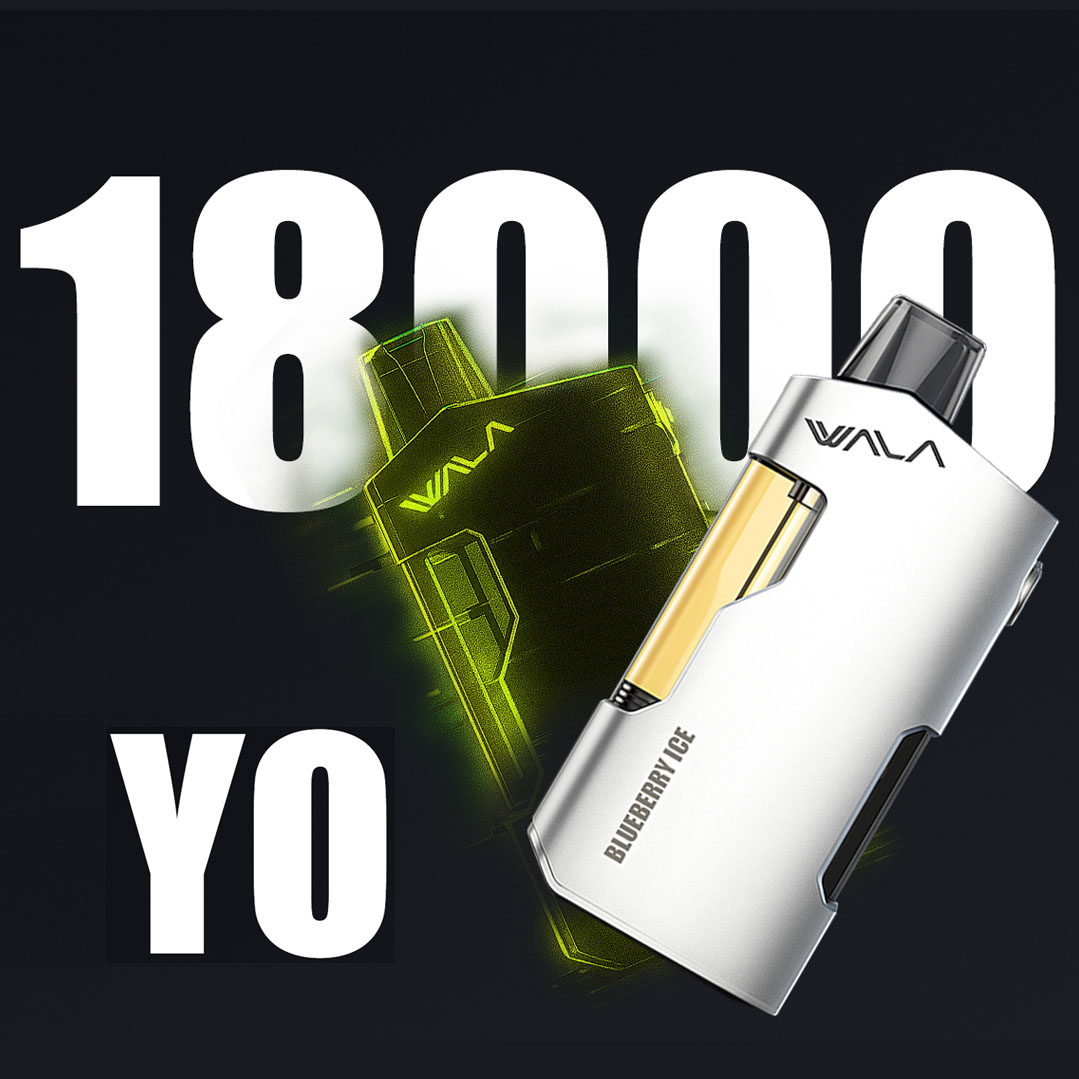
To survive winter conditions, you should strictly choose advanced devices equipped with an Alternating Dual-Mesh Coil System, such as the WALA YO 15000.
Why Dual-Mesh Dominates the Winter Climate
-
Wider Thermal Surface Area: A dual-mesh matrix spreads electrical heat across a broad, microscopic honeycomb surface rather than concentrating it along a single narrow wire. This broad surface area gently warms a larger volume of surrounding cold e-liquid, lowering its viscosity evenly across the wicking ports.
-
Alternating Pulse Technology: Managed by an intelligent onboard microchip, an alternating dual-mesh system alternates power between two independent mesh grids. While Coil A fires, Coil B absorbs radiant heat and pre-warms the incoming e-liquid, ensuring that the cotton never runs dry even when ambient temperatures drop.
-
Stable Resistance Windows: Premium dual-mesh hardware is manufactured using precision-grade alloys that maintain stable electrical resistance ($R$) across wide temperature fluctuations, protecting the device's battery from unnecessary voltage sag.
8. The Chatvaper Logistics Advantage: Climate-Preserved Sydney Stock and AIG Order Protection
Understanding cold-weather physics and utilizing proper winter habits is essential, but there is a major retail risk that many consumers overlook: what happens if your device was frozen, damaged, and chemically destabilized during transit before it even arrived at your door?
This is the hidden trap of purchasing vapes from offshore drop-shippers. When you order from unverified international websites, your parcels are transported inside the unheated, unpressurized cargo holds of international cargo planes (where high-altitude flight temperatures drop below -40°C), followed by weeks sitting in cold, uninsulated shipping containers.
[Overseas Drop-Shipping] ──► -40°C Cargo Hold Freeze ──► Electrolyte Degradation & Seal Fracture
[Chatvaper Sydney Hub]   ──► 20°C Climate Storage   ──► Pristine Battery Life & Fresh Delivery
Exposing brand-new devices to extreme freezing during international transit triggers two permanent hardware defects:
-
Electrolyte Separation and Capacity Loss: Freezing lithium-ion cells can cause microscopic dendrite crystallization within the electrolyte, permanently reducing the battery’s rechargeable lifespan by up to 30% before the customer even unboxes it.
-
Silicon Seal Shrinkage and Pre-Leaking: Cold temperatures cause internal silicon gaskets to contract and lose elasticity, breaking the factory vacuum seal and allowing e-liquid to flood the bottom airflow sensors before delivery.
To guarantee you receive factory-fresh hardware with pristine battery health and undamaged e-liquid viscosity, adult vapers across Australia source their gear exclusively through Chatvaper.
┌─────────────────────────────────────────────────────────────────────────────────┐
│                           THE CHATVAPER DOMESTIC SHIELD                         │
├────────────────────────────────┬────────────────────────────────────────────────┤
│ 100% Sydney Warehouse Stock   │ Climate-controlled at 20°C; zero transit frost │
│ Guaranteed Punctual Delivery   │ Fast domestic dispatch via Australia Post      │
│ Integrated AIG Protection      │ 100% financial reimbursement for courier loss  │
│ Authentic Dual-Mesh Selection  │ Genuine WALA YO 15000 and top-tier brands      │
└────────────────────────────────┴────────────────────────────────────────────────┘
100% Domestic Sydney Warehouse Inventory
We reject the uninsulated international drop-shipping pipeline. Every product listed on our store is physically stocked on our shelves inside our state-of-the-art Sydney warehouse.
Our facility is strictly climate-controlled, maintaining a constant, optimal 20°C (68°F) environment year-round. Our batteries never suffer from cold electrolyte crystallization, and our e-liquids never endure freezing viscosity collapse. Your hardware arrives factory-fresh, mechanically balanced, and ready to perform in any climate.
Guaranteed Punctual Delivery
When winter sets in, you cannot afford to wait weeks for overseas tracking updates that get frozen in customs backlogs. Chatvaper provides rapid domestic processing and guaranteed punctual delivery across Sydney, Melbourne, Brisbane, Perth, Tasmania, and regional centers, backed by full local tracking.
Absolute Order Security via AIG Order Protection
We believe that our customers should never carry the financial liability of transit mishaps. Every single order placed on Chatvaper is covered by comprehensive AIG Order Protection.
Underwritten by the American International Group, this premium shipping insurance fully covers your purchase from our warehouse loading dock straight to your door. If a domestic courier misplaces your package, delays delivery, or damages your hardware during transit, our automated system handles the claim instantly, dispatching an authentic, factory-sealed replacement package or issuing a full refund immediately with zero friction.
9. Frequently Asked Questions (FAQ)
Why does my vape battery die so fast when I am outside in the cold?
Your battery seems to die quickly in the cold due to voltage sag. Low temperatures increase the viscosity of the liquid electrolyte inside the lithium-ion battery, significantly increasing internal electrical resistance. When the coil fires, the sudden voltage drop triggers the device's microchip to execute an emergency low-battery cut-off to protect the cell, even if the battery is mostly full.
Why is my vape gurgling and spitting cold liquid in winter weather?
Gurgling and spitting in cold weather is caused by Phase-Change Condensation. When hot 200°C vapor travels up through a cold mouthpiece and chimney, it cools below its dew point, condensing back into liquid on the inner walls. Taking a draw sucks this accumulated liquid straight into your mouth. You can clear it by flicking the device downward toward the ground.
Can cold weather cause a vape to give a burnt "dry hit"?
Yes. Cold temperatures dramatically increase the viscosity of Vegetable Glycerin (VG), turning it into a thick, semi-solid gel. This thick e-liquid cannot flow through the cotton wick fast enough to replace what is vaporized, causing the coil to heat bare cotton and produce a harsh, burnt dry hit.
How can I keep my vape working when skiing or working outdoors in winter?
Keep your vape stored in an internal body-contact pocket (like an inside jacket pocket) so your body heat keeps the battery and e-liquid warm. Take short 1-second primer puffs to warm the coil before taking a full draw, and avoid leaving your device inside a cold vehicle.
Why is it safer to buy winter vaping gear from Chatvaper?
Chatvaper stores all hardware inside a climate-controlled Sydney warehouse kept at a steady 20°C, ensuring devices never suffer the cold electrolyte damage and gasket shrinkage that occurs during international freight. Every purchase includes guaranteed punctual delivery and complete AIG Order Protection.
Conclusion: Conquer Cold-Weather Vaping with Science and Proven Hardware
Cold winter temperatures present real thermodynamic and electrochemical challenges for modern electronic cigarettes. By understanding the science of Peukert’s Law, phase-change condensation, and VG viscosity shifts, you can easily protect your hardware using simple habits like body-heat storage, primer puffs, and centrifugal clearing.
Most importantly, ensure your hardware is engineered for resilience. Upgrade to precision-calibrated dual-mesh devices that distribute heat evenly, and source your gear through a verified domestic supply chain designed to preserve product integrity from checkout to delivery.
[Don't let freezing temperatures ruin your vaping experience. Secure your 100% authentic, climate-preserved dual-mesh devices at Chatvaper today – Sydney Warehouse Stocked, Guaranteed Punctual Delivery, and Fully Shielded by AIG Order Protection.]